
Seed packets vary wildly in the usefulness of the planting instructions printed on the back, but are usually consistent in advising the deep planting of seeds. The main reason for planting the seed well below the surface of the earth is to keep it moist, and the advice of the seed packet will be adequate in most cases, especially if you have little time to spare for your garden.
But there is always more than one way of doing something, and the standard procedure is often the most expedient rather than the best. For the gardener willing to take a bit more time and care with this year’s planting, shallow sowing can mean better germination and earlier harvests.
The full-grown plant that started life one inch below the surface is no better off than a plant from a seed which sprouted while lying on top of the soil. There are exceptions, of course-potatoes too near the surface develop green skins, and onions (which have no taproot) tend to fall over if the bulb isn’t at least partly covered. Furthermore, the soil protects. the seed from birds.
Still, the main function of deep planting is to keep the seeds moist, and if the gardener can devise some other means of doing this, then there is no seed which need be planted more than 1/4 inch deep. Most seeds, in fact, can be started right on the surface.
There are two main advantages to shallow planting stemming from the fact that the plant does not start to manufacture its own food until it breaks through the earth and is exposed to the sun. If the shallowly planted seed breaks the surface a week earlier than the deeper seed, it matures a week earlier. Also, the more deeply a seed is planted, the less chance it has of getting to the surface at all. Seeds planted close to the surface and supplied with sufficient moisture will have the highest germination rate in the garden.
Peas are planted deeper than carrots because the seeds are larger and require more moisture. But there is another reason very few carrots would make it to the surface if they were planted one inch down. Aside from the fact that the young carrot is weak and fragile, the sprout depends upon energy from the seed to get it to the surface, and the tiny carrot seed simply does not contain enough energy to push a sprout great distances.
The most straightforward solution to this problem is to plant shallow and then get out the watering canand sprinkle lightly twice a day. Since it is only the seed that is being watered, there is no need to soak the earth and the watering can be done very quickly. This solution involves continual addition of moisture to the ground. The alternative is to keep the moisture already there from evaporating.
One of the oldest methods is to lay a board over the seed bed and inspect regularly for white shoots. When they appear, remove the board and they will stand up and turn green. If it is carrots you are starting, do not wait two weeks before inspecting under ideal circumstances, carrots will germinate in five or six days.
A one inch mulch of hay or straw is surprisingly effective at keeping the soil from drying out. Robust sprouts like beans, peas and corn have no trouble getting through this mulch, but it is not so good for carrots, beets or parsnips. Plastic sheets can be used in the same way as the board but with one important advantage. Plastic transmits and holds more heat than the board and heat ranks with moisture in importance in the germination process. Black plastic is the customary mulching material because clear plastic can at times make the soil too hot. However, if it is just used to promote germination, clear plastic is superior because the spring soil is relatively cool and germinating seeds love heat.
The ideal germination temperature is usually 10° to 20° (F) higher than a plant’s ideal growing temperature. Tomatoes, for example, grow best at 60° to 70° but sprout fastest at 80°. Peas grow very well at 45° to 50° but need at least 50° to germinate and prefer 65° to 75°.
Mother Nature probably ranged it this way to keep plants from germinating too early. The warm spell in March would be sufficiently warm for many plants to grow, but it is not warm enough to make the seeds germinate, and hence they are not killed by a severe frost on the first of April. The warm spell in the middle of May, however, is sufficient for germination and most of the plants that sprout then will not be harmed by the cooler temperatures at the end of the month.
This is fine for Mother Nature, but inconvenient for the gardener who wants his crop to start growing as soon as he plants it. Furthermore, the most pleasant time to work the soil and do the planting is that warm spell in May. But if it turns cold again by the time the seeds get planted, they will have to sit for a week or two until another warm spell comes along to get them going. If the cold spell is very wet as well, then the seeds may rot.
The best time to plant is at the beginning of a warm spell. Weather forecasters are usually more reliable in their long range forecasts for the next week than they are in their more specific forecasts for tomorrow. If the weatherman is forecasting a long cool spring, you might try planting close to surface and watering several times a day with warm water. Once they are up, the peas won’t mind the cool weather; nor will the parsnips, beets and members of the cabbage family.
Any method that gives the seeds moisture and warmth (without flooding them) will speed up germination. If the seeds are also planted close to the surface then the number of seeds to germinate will be near their maximum. Most seedsmen give germination rates, and these are usually close enough to 100% that there is no need to plant thickly and then thin out. Thus some of the extra labour used to get the seeds to germinate quickly can be regained by spacing the seeds so that they need not be thinned.
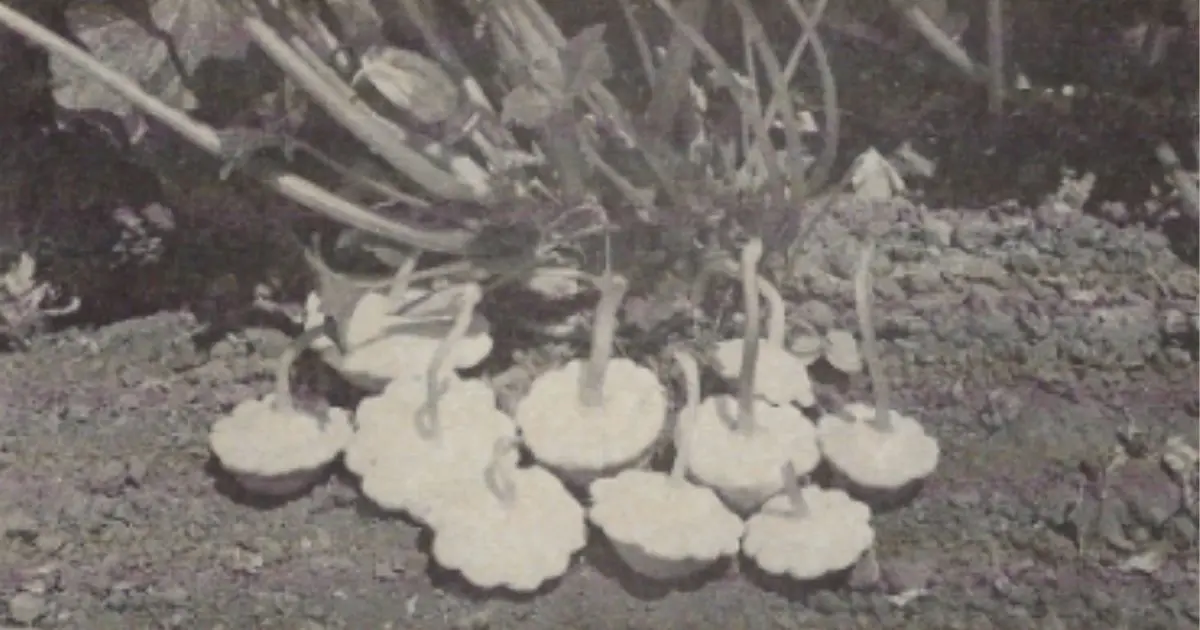
If you have trouble getting members of the squash and melon family to mature, try starting them inside. The larger they get, the more they are apt to be set back by transplanting so there is no advantage to starting them a month or more ahead of time. But a few days after they have sprouted they can be moved (carefully) with very little setback. If the seeds are planted outside, even in weather that is warm for June, they are apt to be several weeks in sprouting.
However, if a spot can be found inside to give them 80° to 90° temperatures, they will sprout in a few days. If, with the help of the weatherman, you can get them out at the beginning of that especially warm week in June, then you will get a two to four week start on the season.
For more on surface planting, see the section by Richard Clemence in “The Ruth Stout No-Work Garden Book.”
Originally published 50 years ago in 1976. Some info may no longer be accurate.