
The Township of Carden (after old “Woodcock” Carden of Barnane Eile, County Tipperary) lies in the north-west of Victoria where Hereford steers and County, Ontario a sour, stif place-beefy tourists vie for a tuft of grass. I have, in newspaper columns, magazines and novels, used Carden as a back-drop for nostalgia stories. Like Queen Victoria, Carden was not amused. In fact, my father owned 700 and something acres of land in Carden and an adjoining township Bexley. Carden was principally settled by immigrants from the south of Ireland; Bexley was Anglo-Saxon with a curious bent toward fundamentalism and total immersion.
Today, Carden, and most of Bexley, is the preserve of cattle ranch- ers and, as stated, tourists and those catering to them. Now if a curious person were to turn west from the old Victoria Road, which ambles north from the Portage Road and connects with the Monk Road, and proceed a mile, an old trace leading directly north marks the 10th Concession of Carden. From about 1850 to the opening shot of World War 1, twenty or more families scratched out a living along a three-mile strip of a wagon trail. Not one living soul resides on Carden’s 10th today.
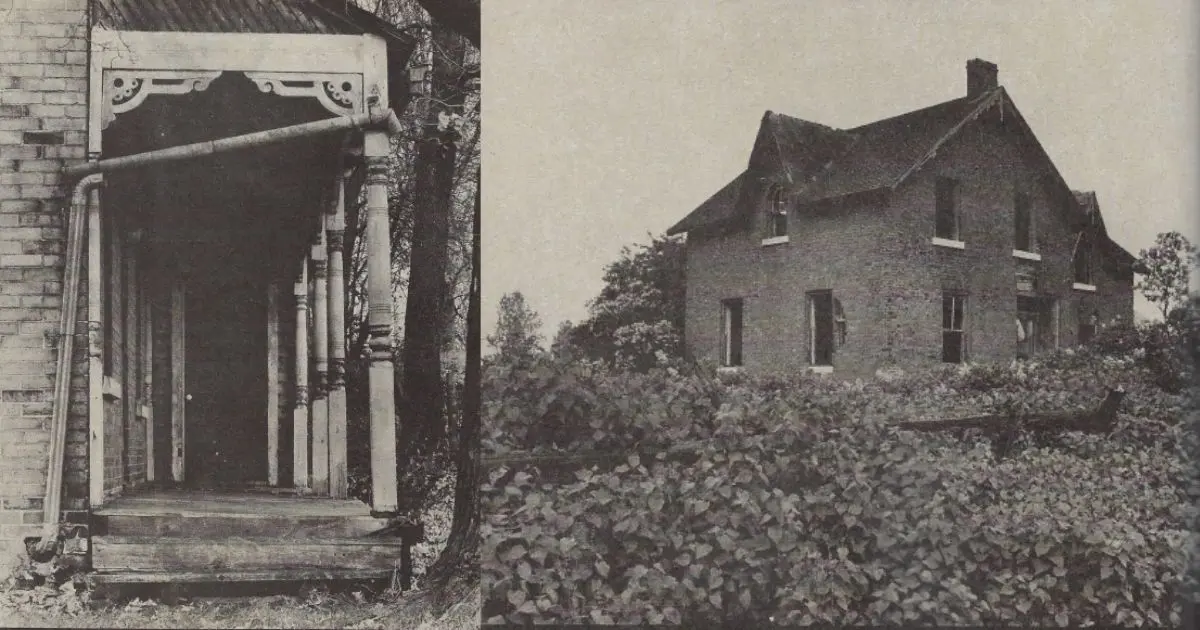
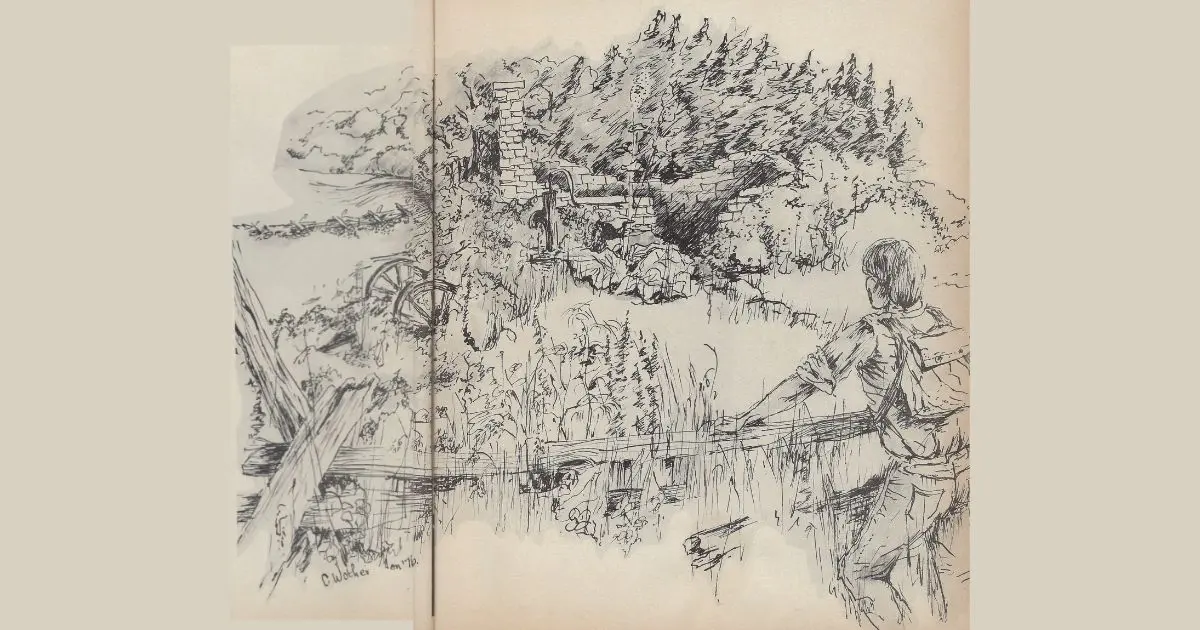
Let us walk up the old trace, rutted years ago by farm wagons, buggies, and the dismal black hearse with the nodding jet plumes fastened to the horses’ hames. This dreadful vehicle, the “Coacha Bowr,” was well enough known what with the rate of child mortality, the epidemics of fevers, the slow, strangling grip of tuberculosis, called consumption or “the con.” To your right there under that stand of Manitoba maples or box-elder are a few foundation stones and bricks tumbled out of a chimney.
That was the old Devlin place. I mind when the old barn was standing; that was forty years ago. A nest of burdock marks where the barn stood. We walk among the lush green grass, our feet sinking to the ankles in self-heal, buttercups, dandelions, and star-grass.
Look at those roses. No, they’re not wild; they are feral: escapees from some garden. The colour has been leached out of the petals by years of growing wild; the perfume is there, though, isn’t it? It’ll take you back a hundred years or more, that fragrance.
On your left, under that hoary apple tree (hasn’t felt the pruning shears in a century) stood a log house. A man from the
French Settlement lived there; his name was Trefele Rousseau. He married a woman from the County Fermanagh. Widowed early, Mrs. Rousseau proposed to my grandfather, saying she would “lead him to a mossy bank by a silver stream.”
A Freudian disciple might have fun tracking the symbolism. should, I suppose, be grateful grandfather didn’t snap at the bait. I remember the log house, empty of course, and a half- dozen mouldering bee boxes. Next left encourages pathos: Fagan’s. Youthful Amby Fagan shot and killed another youth and fled to the United States. His mother, anguished and bitter, hanged herself from a clothes-line. Her spectre has been heard, some claim, many a night, keening as the wind keens through a stunted white pine.
Speaking of pine the great stumps, some six feet in diameter, dotting the lush, rolling pastures. Before settlement the lumber concerns bought the timber and land it grew on for a song and a dance from crooked politicians acting for the Crown. After the immense stands of pine had been hacked down, sawn on the spot into boards by a portable sawmill, the raped land was hawked to real-estate speculators who, in turn, peddled it to the ignorant Irish for ten times its value.
The soil was thin; the great stumps immovable; the settlers had but the most rudimentary of implements. After the pines were felled the brush lay in scattered heaps that caught fire and made the dry seasons a hell of choking smoke and cast a red glare against the night skies.
Patiently, the settlers dragged granite boulders: “erratics” left by glaciers from the fields. The mighty stumps were blown out by black powder or winched from their claw-hold of the earth by oxen and stumping machine. A stone-lifter was invented: this was a high-bodied wagon with rope or chain-falls underneath to grip and raise the erratics. Few farmers could afford such sophisticated gadgetry.
Now it is easily seen that plots of 50 or 100 acres could not have supported the large families; and it was common for settlers to have twelve or more issue. In winter the men and older boys sent to the shanties to work; many “timber-beasts” travelled into Michigan and Minnesota and Wisconsin, following the termite-like lumber outfits. Others worked on the railroads, laying track.
A cement plant on Raven Lake, until it went broke, hired nearly 100 labourers. For lack of ready cash the pioneers bartered, tradesmen taking butter, eggs, honey, beef and pork, etc. for masonry, carpentry and joinery, and similar crafts. Most women spun wool, although poor families (including mine) hunted through deserted lumber camps for cast-off sox, mittens and sweaters to be unravelled and re-knit for various garments.
Child mortality was high; barely half of children born reached maturity. Tuberculosis was a terrible killer; so was typhoid fever. Doctors were few and these were inferior: a first- rate practitioner would not practise in such a poverty-riddled area. Home remedies were grim; some were comical: urine and sugar for colds; whiskey for fevers; timothy hay for piles. Every hamlet had at least two saloons and one or more brothels. Drunkenness was appalling, with raw, hot whiskey selling for $1.00 a gallon or 10 cents a shot in the saloons. Fighting at barn raisings, country fairs and outside (and in) saloons was barbaric: men had eyes gouged, ears bitten off, and teeth smashed out. The Irish Catholics were often soddenly drunk; men beat their wives and children; men would go off on a week’s bender leaving their families to starve.
“Home remedies were grim: Urine and sugar for colds, timothy hay for piles.”
One recorded case indicated a woman and two small children starving to death when the husband was away on a drunk. Incest was common among Protestant families; also a tendency for first cousins to marry, leading to inbred peculiarities and certain types of hereditary afflictions.
But back to the pine stumps: I find it odd, noting the tendency of white pine to rot quickly when in contact with the ground after being cut, pine stumps are yet standing and without a sign of rot 120 years after the tree was felled. It might be the resin; in the lineaments of the wood, fat veins of resin linger. For a wood fire no better kindling exists than stump pine. Use stump pine splintered and sharded and dosed with coal-oil and your fire is away.
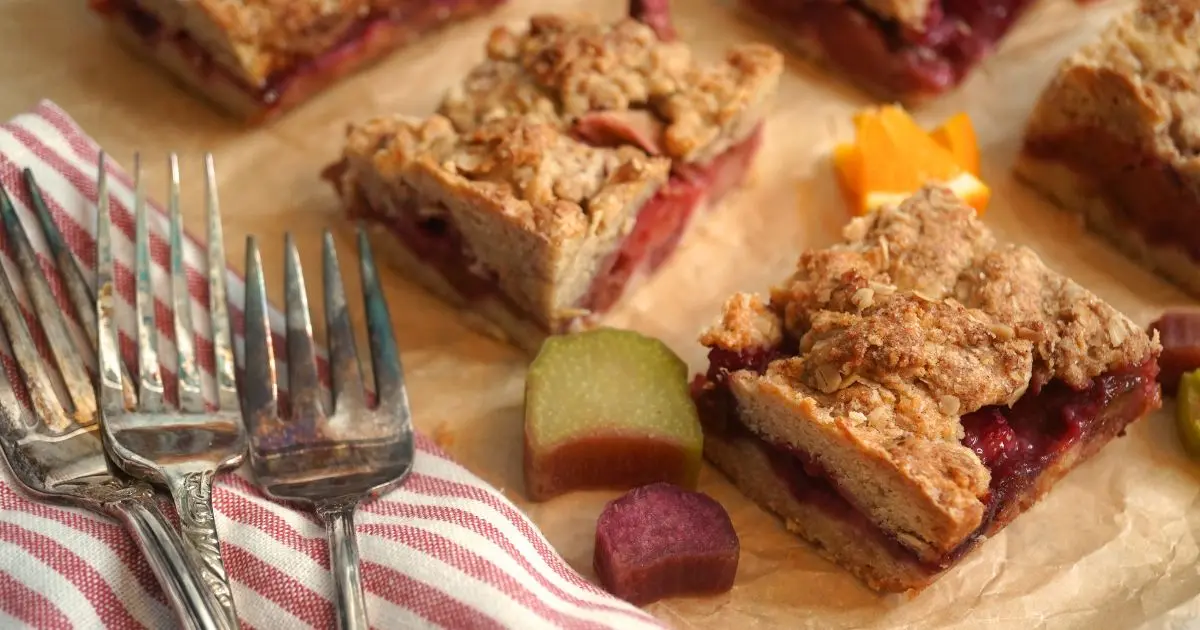
We wander on. Past the old places: the McCann’s, the Murphy’s, the O’Hare’s, the Lacey’s, the Plunkett’s, and on down the line. At the very end of the 10th where the rutted trail falters and dies entirely is a spreading patch of fine strawberry rhubarb. Here was the demesne of my Uncle John O’Mullally.
A solitary turkey vulture wheels patiently overhead. A hermit thrush, as mournful as a funeral bell, calls from a hardwood tangle. A ground-hog shuttles heavily through the headed timothy and dives into his entrance under a stump. Virginia creeper, bittersweet, and poison ivy spread their vines and foilage over snake-rail fences. Snake rail and stake-and-rider. Where the house stood – where Adele Prassie from the French Settlement came as a bride – grows a handful of ragged-robin. Adele died and was succeeded by Kate Burke. And Uncle John died and Aunt Kate died and only strawberry rhubarb and a clump of ragged-robin mark their passing.
We must turn and go. I’ve been away from the drink for two years, but I get the lonesomes here and long for the drop that cheers. The twilight falls as softly as a curtain; in the mauve distance a farm dog goes bark-bark. A motor hums upon the high road; whippoorwills get into a slanging match down in the bosk.
Bareheaded, sober of mind, we steal along the trail buried half in buttercups, self-heal and daisies. A night-hawk cruises with measured beeping; he falls toward the darkling earth with a low, shuddering thrum. The fireflies are out; the fireflies and the bog lantern some call The Fair Maid of Ireland. We hurry past the Fagan place, trying not to hear the rising wind, or is it a dreadful keening?
(Note: All surnames with the exception of John O’Mullally, Adele Prassie, and Kate Burke, are fictitious.)
Written by Dennis T. Patrick Sears who is the author of the best-selling Canadian novel, “The Lark in the Clear Air” (McLelland & Stewart, 1974). He lives near Glenburnie, Ontario and is now working on a new novel,
Originally published 50 years gao in 1976. SOme information may be out-of-date.