

This article was written 50 years ago. Some info may be outdated Written by James M. Lawrence in 1976 – Issue #1
Under cultivation since pioneerr times, Blackberries today have almost achieved delicacy status, commanding high prices and appearing only rarely in most markets. Partly a victim of its own thorniness, the blackberry has been in steady decline since the 1940s, as commercial growers have found willing harvest labour increasingly short. Too, black berries have been hurt by a number of diseases and insect pests and have been set back by the distribution of sterile clones.
For the home gardener willing to put some care into their management (a thornfree variety is now available) and willing to seek out good breeding stock, the cultivation of a black berry patch can have mouth watering.rewards. Prof. D.K. Ourecky of Cornell University ofers the following tips for successful black berry culture:
The location of a black berry planting is important because it may be productive for many years. A fertile sandy loam soil, high in organic matter is preferred. A slight slope with good water drainage all year and no frost pockets will contribute to success.
AVOID:
- Proximity to wild raspberries and blackberries and even older cultivated plantings because of virus diseases, orange rust and insect pests.
- Light droughty or heavy clay soils, and
- Areas infested with perennial weeds such as quackgrass, unless the land can be ridded of these grasses prior to planting.
Propogation
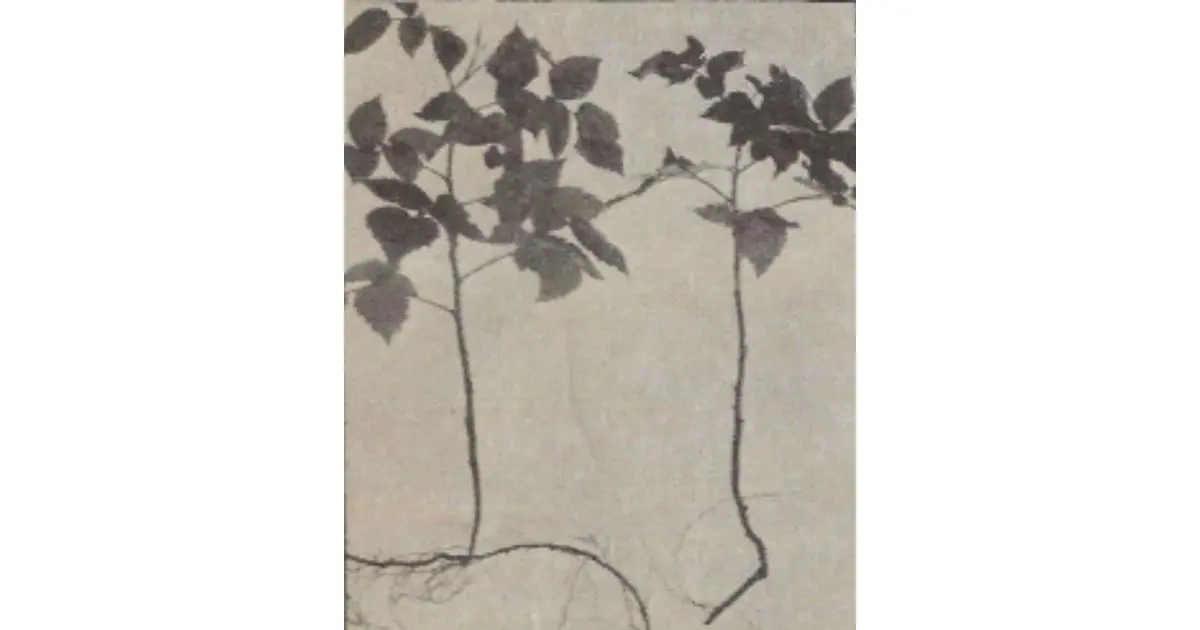
Blackberries are easily propagated as suckers or root-cuttings. Plants should be set 2-3 feet apart in the row, with 8-9 feet between rows. Suckers will fill in the row making a hedge. Maintain a row width of 12 to 18 inches.
Plantings made in the fall should have soil mounded up around the cane to prevent frost action. This is not necessary after the first year. Spring planting should be done as soon as the soil can be worked. Poor stands may result from late planting when temperatures are high and soil is dry.
Root-cuttings are made in the fall by cutting roots about the size of a pencil lead into 3″ lengths, storing at 32° (F) in moist not wet sand or peatmoss. In the spring or fall cuttings may be planted in a nursery row 2″ to 4″ apart with 36″ between the rows and covered with 2″ to 3″ of soil. It is often desirable to place a light mulch, such as sawdust, over the row of root-cuttings to reduce loss of soil moisture and prevent a hard crust from forming and preventing the shoots from emerging easily. The following fall or spring the plants can be dug and set in the field.
Agriculture)
Varieties
Darrow is the best variety available. The plants are vigourous and hardy, productive and the berries are large and of good quality. Bailey and Hedrick are being replaced by Darrow. Lowden, a Canadian variety originated in 1926, is also recommended by C. L. Ricketson, of the Horticultural Research Institute of Ontario at Vineland.
Because of their lack of hardiness, black berries do best where winters are mild or snowfall heavy. In colder areas, a heavy mulch is needed, and the canes can be bent over and then covered with straw or brush. The problem of sterile plants is seen when blackberries bloom but do not produce fruit. These should be removed when spotted.
Blackberry canes are fruitful for only one season, after which they die and should be cleaned out, leaving the new canes which have appeared and which will produce the next year’s crop. In the spring, the new canes are pruned to a height of not more than five feet and side branches, if any, are cut back to between 12″ and 18″. To maintain shorter plants, the tops of new canes can be pinched off when they are 3 feet high.
Individual rows of plants should not be allowed to become too thick, as the light will not penetrate to the centre and picking will become difficult. Weed control can become a problem in plantings of both blackberries and raspberries, and gardeners who do not wish to use herbicides should consider the application of a mulch. Grass clippings, straw, old hay, sawdust, wood shavings and other materials spread at a depth of four to six inches will keep blackberry beds mostly weed-free.
The mulch, which can either be kept only in the rows or used to cover the entire patch, serves several additional functions, conserving moisture, cooling the soil, stopping soil erosion and eliminating root. damage from cultivation. If mulches are used, heavy applications of nitrogen must be made each year to compensate for that tied up by the organisms decomposing the mulch.
Black berries thrive on nitrogen, and a liberal application of manure in the early spring or late fall is highly recommended.
It should be reemphasized that care be taken in establishing your black berries, which with proper attention should yield for more than six years. The Ontario ministry of Agriculture suggests the following precautions:
“Do not plant raspberries or blackberries in soil which has grown strawberries, tomatoes, peppers, eggplants, or potatoes in the previous four or five years. There is a risk that verticillium wilt will be a problem when plantings follow these crops. Partly for disease prevention, a few years should pass before raspberries or blackberries are planted back on land where they grew before.
“Optimally, a green-manure crop should be grown the year before planting raspberries or blackberries. This will help add organic matter and control weeds. Perennial weeds such as quack grass, Canada thistle, bindweed, nutsedge should be controlled before planting.”
Among the possible green-manure crops you might plant are Italian rye grass, buckwheat, oats, corn, or beans. Such a crop should be tilled into the soil well ahead of the planting in order to allow decomposition. The legumes such as beans are especially recommended, as they fix nitrogen from the air in their roots providing, in Bessence, a free fertilizer.
Areas between the rows should be cultivated in the spring and early summer to control weeds and spreading suckers, or sod can be established between rows. For additional information, the Ministry of Agriculture and Food in Ontario has a most useful booklet titled “Raspberries and Blackberries in Ontario”. Cornell Extension Bulletin 1216 deals with black berries, currants and gooseberries and is available for 10¢ (free to New York residents) from Co-operative Extension, New York State College of Agriculture and Life Sciences, Ithaca, New York. 14850.
Originally published 50 years ago in 1976. Some information may be out of date.