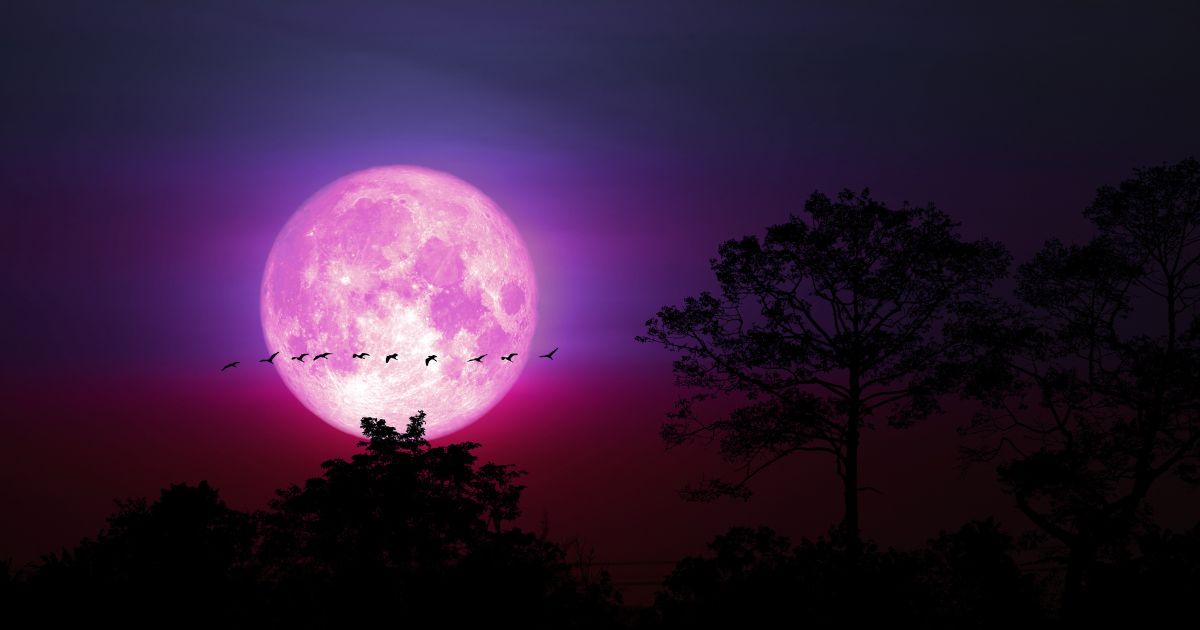


The second full moon of the summer is often known as the full Buck Moon because the antlers of male deer (bucks) are in full-growth mode at this time. Bucks shed and regrow their antlers every year, and as they get older, the antlers get bigger and more majestic — a vision of elegance and strength inspired by the ever-changing cycle of life.
In North America, the First Nations tribes that comprise the Algonquin people looked to the moon to track time. They assigned a name to every full moon to reflect the seasonal activities that accompanied each cycle. Theirs was a vast territory that extended from Lake Superior to the eastern seaboard, resulting in a variety of names throughout the Algonquin community. As such, July’s moon is sometimes referred to as Raspberry Moon, Berry Moon, Moon
When the Chokecherries are Ripe, Feather Moulting Moon, Halfway Summer Moon, Month of the Ripe Corn Moon, Salmon Moon and Thunder Moon.
The full Buck Moon will reach peak illumination at 4:38pm EDT. Look towards the southeast to watch it rise above the horizon.
Fun fact: In 2011, the Canadian Mint released a limited-edition $5 coin to recognize the July Full Buck Moon.
FUN FACT: 1/6th of Ontario is covered in water! Ontario has over 250,000 lakes — that’s 1/5th of the world’s fresh water supply. 10,000 years ago, the last glacial ice sheet that covered the province receded and as a result, many lakes were formed including the Great Lakes with Lake Superior being the biggest of all. There are also over 100,000 kilometers of rivers in the province.