
Here’s everything you need to know about the origin of humans providing shelter for our feathered friends, and how to choose the best birdhouse for your property.
For generations, birds have represented freedom and independence, while birdhouses have evolved to symbolize a sense of home and charm. Some of the earliest documented examples of birdhouses can be found in thirteenth century Turkey, in a region known as Anatolia. According to Turkish architect and poet, Cengiz Bektas, birdhouses personified the Anatolian love for birds and the belief that humankind must be in balance with all creation. By the sixteenth century, birdhouses could be found throughout Turkey, and they became more stylish and elegant in their designs. Built into public buildings and schools, birdhouses symbolized and impressed upon adults and children alike the Ottoman traditions of kindness and mercy.
Early European examples of birdhouses can be found in Belgium and Holland during the fifteenth and sixteenth centuries. There, ceramic vases or pitchers were placed horizontally outside of homes to attract birds. Regrettably, most of these houses were not constructed for the love and appreciation of birds, but rather used to collect eggs or trap birds for food.
In North America, birdhouses constructed for use by wild native songbirds are documented as early as the nineteenth century. Troubled by what many saw as the ill effects of the Industrial Revolution, proponents sought to restore the mutual and beneficial relationship between people, wildlife and the environment. Most notable among them was the Audubon Society. Named after naturalist and illustrator John James Audubon, the Society was incorporated on January 5, 1905, with a stated purpose to improve the protection and conservation of birds and wildlife. By the 1920s, the popularity of building and installing birdhouses for pleasure and goodwill was booming in both Canada and the United States.

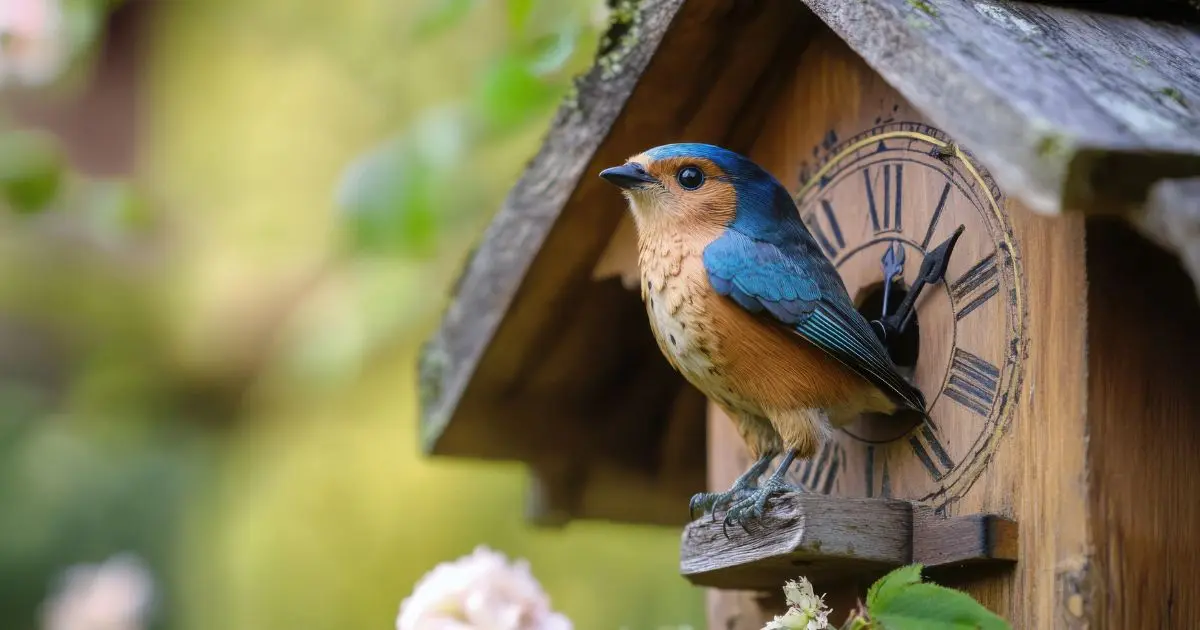
Through their designs, birdhouses act as a window into character and individuality. They are often used in remembrance of those who have passed, and they give expression to our love of nature. When choosing a birdhouse, there are several factors to consider. First is the material used. Western redcedar is best, as it is a naturally rot-resistant wood and one of the best managed forests in North America. Try to avoid plastic, vinyl and even plywood as the process used to manufacture these materials is harmful to the environment and runs counter to what you’re trying to achieve, in the big scheme of things.
Second, the house should have vents for air circulation throughout the nesting box. Vents should not be big enough to allow predators in, but they should allow for the flow of air. The house should also have drain holes in the floor to allow water out, as well as be designed with easy access to the nesting box so it can be cleaned out after each season.
For a birdhouse to achieve its intended purpose, it must be designed in a manner where form follows function. A properly designed house is what makes it a home. When deciding upon placement of your birdhouse, it’s best to install it facing east or southeast, to protect the birds from the prevailing winds and the hot afternoon sun.
Birdhouses made for the love and appreciation of birds have a long and cherished history. Ensuring your birdhouse has the qualities needed to not only attract native songbirds but provide a structurally sound environment for them to live and thrive shows a commitment to sustainability for future generations and the grace to help those who seek it. It can also provide many hours of enjoyment and satisfaction, which is something we all can appreciate.