
Change the latitude, change the attitude. It’s an old saying in sports for when a player doesn’t mesh well with the team. In layman’s terms, it means to trade them. However, what if a change in latitude could bring about a change in attitude and perspective, with respect to birding — or perhaps more specifically, the way in which we welcome the return of some of our feathered friends depending on where we live.
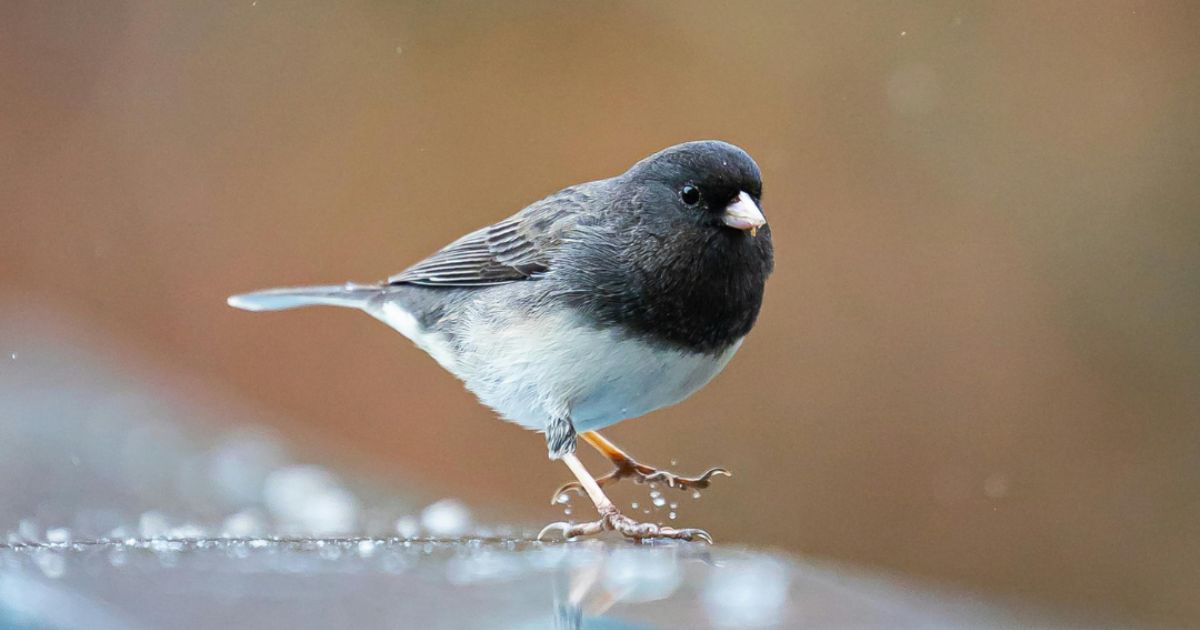
For people living in southern Ontario and the lower 48 states, the Dark-eyed Junco is a harbinger of winter. As a migratory bird, it arrives in late autumn and remains until mid-spring before setting off again for their summer breeding grounds. In fact, Dark-eyed Juncos have been nicknamed “snowbirds” for their consistency in arriving just ahead of winter’s grip. These little birds often provide a welcome flash of color during winter as they fly against a snow drenched backdrop.

For people living in other areas of Canada, including Ottawa, Quebec City, Winnipeg, Saskatoon and Edmonton, however, the return of the Dark-eyed Juncos means something much different. In these regions, Juncos are a sign of spring. When they are spotted, I can assure you the joy is real — they are more reliable than Wiarton Willie, I dare say.
The Ornithological genus of the Junco is that it is a New World Sparrow with two distinct species. The Dark-eyed, and the Yellow-eyed. The Yellow-eyed Junco is found primarily in southwestern United States, Mexico and Guatemala. The Dark-eyed Junco is found across both Canada and the United States. The Slate-coloured Junco is perhaps the most familiar of the group, since it is the most populous with an estimated 630 million. There are, however, five other groups of Dark-eyed Junco, each specific to a region of North America. These include the Oregon, Pink-sided, White-winged, Gray-headed and Red-backed Juncos.
While Juncos are small, they are a hardy bird. Even with the harsh bite of winter, the Dark-eyed Junco prefers to make its nest on the ground, often in small depressions or at the base of plants or trees. For me, living in southern Ontario, the Junco is definitely a harbinger of winter. I do, however, enjoy these little birds, and if you’ll permit me, I’d like to end our time with a little rhyme.

The Dark-eyed Junco prefers to feed on the ground, enjoying the seeds we scatter around. Filling their bellies with what they can find and tucking away when weather is less than sublime. They hop and skirt over the snow, looking for shelter when the cold winds blow. They can often be found during woodland walks and like to gather in sizable flocks. You can always tell when a Junco takes flight, as their tail feathers are a-flicker with white. They bounce and weave over the snow-covered leaves through winter’s filtered light. I can’t imagine a winter without this little bird, even if I think the weather absurd.

Founder of Sara Frances Designs and resident birding expert Scott Holland shares his experiences and insights on birding and bird related topics. A craftsman woodworker at heart, Scott’s birdhouses are more than just functional structures; they are works of art that showcase his skill as as a woodworker and his deep appreciation for nature. His writings explore interesting topics around birding, nature conservation, and the importance of preserving our natural habitats.
Visit his website at www.sarafrancesdesigns.com or follow him on Instagram at www.instagram.com/sarafrancesdesigns