
My favourite movie is National Lampoon’s Christmas Vacation. It came out in 1989 (35 years ago!) and I have probably watched it over 300 times. (Did I mention I listen to Christmas carols and watch holiday movies when I am feeling anxious,
regardless of what time of year it is?)
It never fails to make me laugh and reminds me how ridiculous it is to try to make the holidays – or frankly, any family gathering – flawless, when being with family is all that really matters.
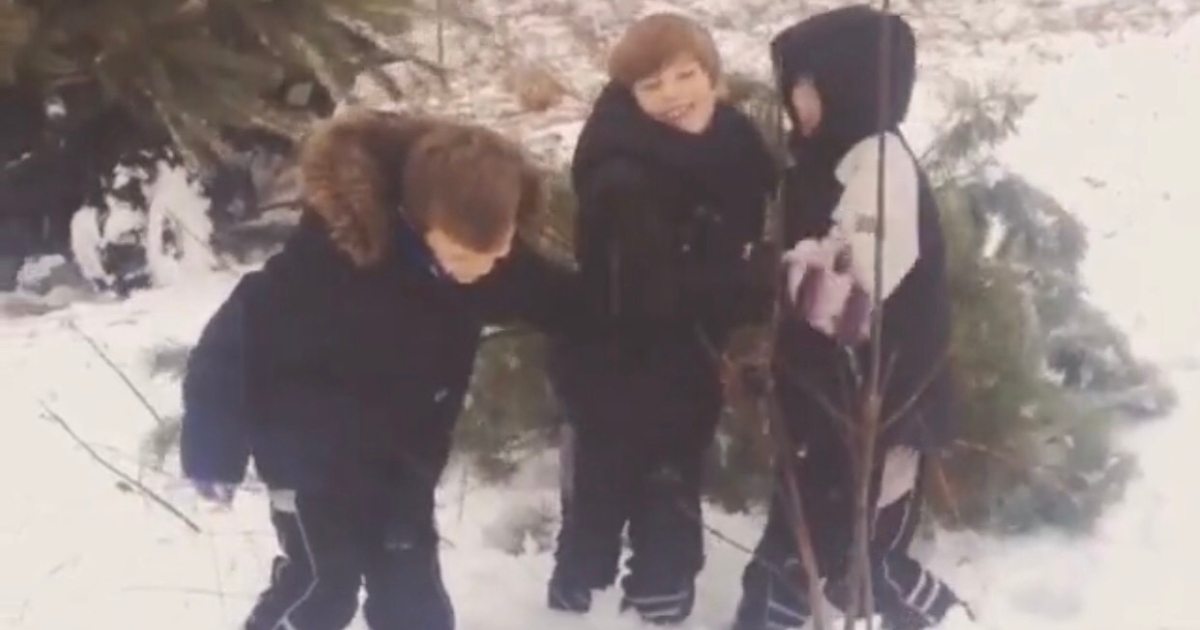
My family of six re-enact the Griswold’s annual trek into the forest to find the perfect tree, minus the road rage and
near-fatal accident. (Note: Clark says something rather controversial about Christmas tree lots to explain to his children why
they are tromping through the snow, and to be honest, the debate about cutting down a tree, buying a precut one, purchasing an artificial one and using a “live” one is ongoing; please keep reading.)
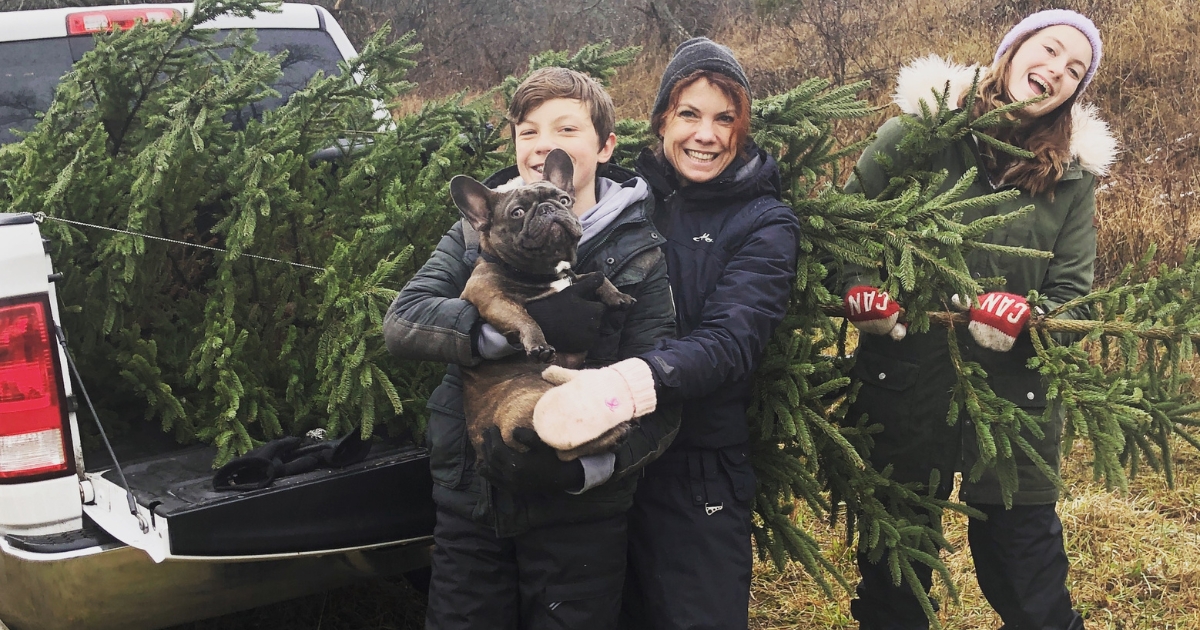
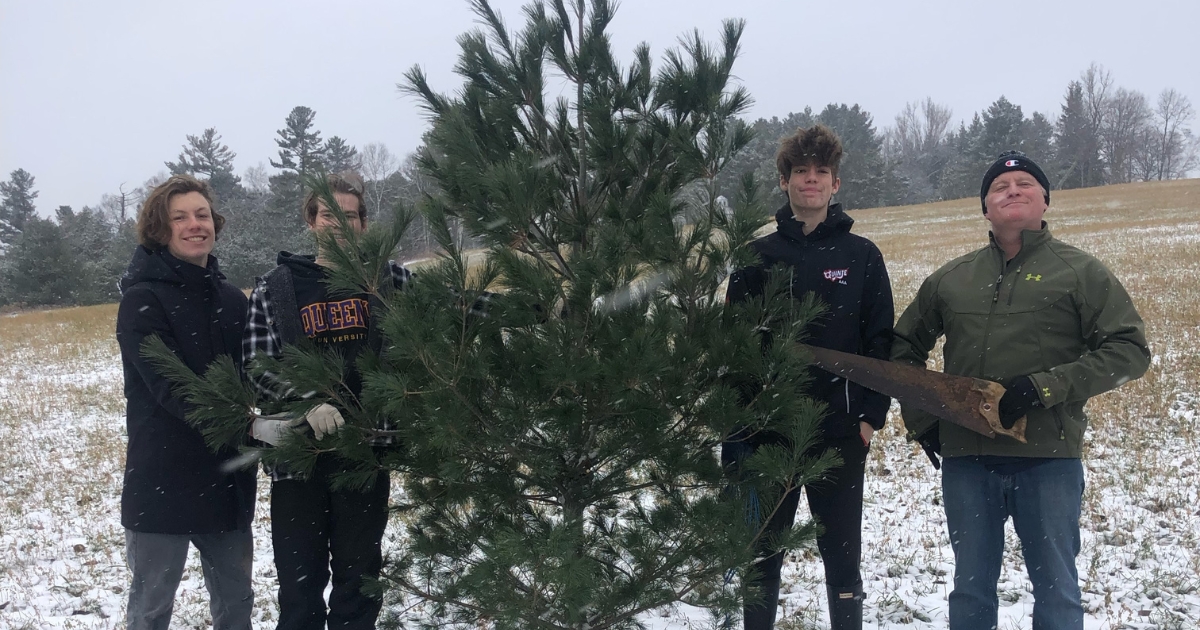
My in-laws own just over 150 acres in rural Ontario not far from where we live, and every year, usually the first weekend in December, my husband and I would load up our four kids and whatever dogs we had at the time, and head to the property to cut down our tree.
Then, every spring, we would return to the general area and plant two seedlings to replace the tree we had taken. Keep in mind, this is not a thoughtfully planned tree lot, and the variety of options included pines, cedars, firs and spruces, of various shapes and sizes, none of them idyllic. It was a good thing we were not picky: Whichever one looked vaguely like a Christmas tree was deemed “The One.” Strangely, every year, without fail, it was always the first tree we saw that was declared “the best tree yet!” despite all of us agreeing that we should keep looking. (That extra time we took walking through the forest, playing in the snow, only to return to the original pick, was all part of the ritual.)
Now, I understand not everyone has access to a private forest or a cut-your-own-tree farm, and even if they did, dragging their
kids through the snow, “freezing their baguettes off” (as they say in Christmas Vacation) may not seem like an appealing option. Plus, there is the aforementioned debate: What is the most sustainable way to continue the tradition of having a Christmas tree? I’ll give you the facts, as impartially as I can, and let you decide.
Let’s start with the obvious regarding artificial trees, as stated by One Tree Planted (onetreeplanted.org): “Because most are made with plastic and metal materials, they take a lot of resources to create — and their plastic components will exist for thousands of years.” (Many resources also remind us that these fake trees are often manufactured in foreign countries, requiring large amounts of fossil fuels in production and for transportation to international retailers.)
“A real Christmas tree in your living room, grown in Canada, represents employment for thousands of people from the farm, to the transportation, to your neighbourhood market,” our friends at Forests Ontario say on their website (forestsontario.ca/en), confiming more than one million trees are sold in Canada every year.
According to earth.org, real Christmas trees have an average carbon footprint of 3.5 kilograms of carbon dioxide if they are disposed of via a wood chipper or bonfire. However, if they end up in landfills, the carbon footprint increases four-fold, which is equivalent to 16 kilograms of carbon dioxide.
By comparison, a two-metre-tall artificial tree is estimated to have an equivalent carbon cost of 40 kilograms, should it be discarded. In other words, we would have to reuse our artificial Christmas tree for at least 12 years for it to be more eco-friendly than a real Christmas tree.
The Nature Conservancy votes for real trees. “Buying real trees will help keep tree farms in business, and, in turn, keep their lands covered in the healthy forest habitat that wildlife depends on to survive. When our forests are sustainably managed, they can produce renewable resources like Christmas trees and other wood-made products.” (Visit the Nature Conservancy of Canada at natureconservancy.ca/en.)
In 2018, the CBC published an article that looked at which option was the greener, cleaner way to have a Christmas tree, and concluded that, “a real tree generates fewer greenhouse gas emissions per Christmas than an artificial one, but that changes if you keep your artificial tree for longer, since the emissions are divided over many years. To minimize the carbon impact, studies say you should keep the same artificial tree for at least eight years, and preferably more than 20.” They also noted that driving a few hours to cut down a tree (or visiting family and friends, for that matter) had a greater environmental impact than
buying a Christmas tree.
Sheridan Nurseries adds: “The cultivation of fresh-cut trees also contributes to soil stabilization and erosion prevention. The trees’ root systems help anchor the soil, preventing runoff and erosion, thus preserving the quality of water bodies and the surrounding environment.”