

Modern versions—whether temporary or permanent—may be the modern-day answer to your shelter and/or storage needs.
One thing about an active, rural life is that it often comes with a lot of outdoor stuff that needs protection from the elements. A tractor, wood splitter, snow-removal equipment, fishing boat, perhaps a hay mower and baler—the list can be long. This is why covered storage space is often at a premium for country people. But how best to get the shelter you need? I’ve weighed the options and found that something generically called a “fabric structure” makes a lot of sense.
Let me show you why, how I went about choosing a supplier, designing a structure and preparing a foundation for the 42-foot-by-80-foot unit I’ll be putting up this season.
Fabric Structures 101
A steel frame covered in a tough synthetic tarp—this is what fabric structures are all about. I first saw them popping up in my part of rural Canada in the early 1990s, mostly for hay storage back then. And to be honest, I wasn’t impressed. How could something like this possibly be strong enough to resist heavy winds?
Can a tarp really support a heavy snow load? And how many years could that synthetic covering possibly last in the sun, rain and frost? I was skeptical, but time has proven my fears unfounded. Even some of those original structures that left me doubtful when I first saw them more than 30 years ago are still doing fine today.
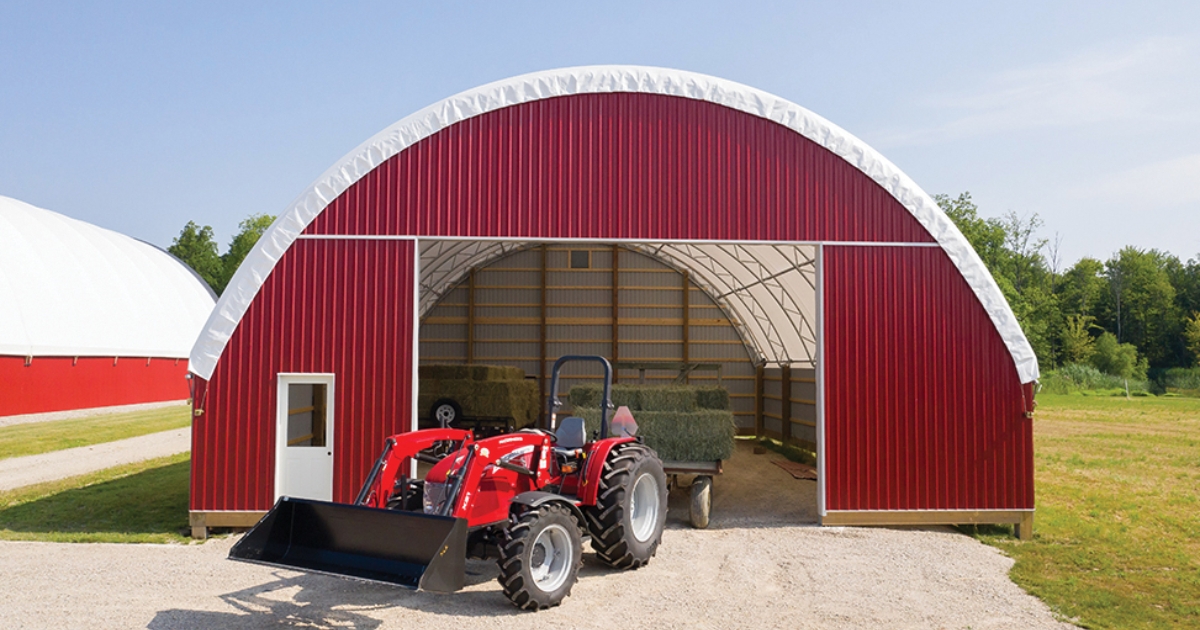
Benefits of a Fabric Structure
I’ve lived with a small 16-foot-by-30-foot structure for 15 years, and this experience has shown me the four main reasons I like
this option for creating a large, sheltered space:
Exceptional indoor environment.
Step inside a fabric structure during the day (even a cloudy day), and you’ll be impressed with the bright and pleasant level of natural light. It’s diffuse and gentle, while still making it easy to see. This is especially true if you choose a white cover, the most popular option. And though you’ll need lights if you intend to use your shelter at night, daytime operations are completely fine without them.
Passive solar heating.
This really surprised me. Even on the coldest days at my northern Ontario homestead, my small fabric shelter warms up nicely in full sun with the doors closed. The solar gain is surprising. If it’s the depths of winter, you’ll probably still need a coat inside, but it’s not uncommon to find indoor temperatures 15oC warmer inside than outside, all with no heating system or insulation.
Quicker, easier construction.
When the parts for my 3,200-square-foot structure arrived, I was surprised to see how easy the bundles were to offload. Everything arrived on a trailer pulled by a pickup truck. And in much less time than it takes to frame a wood or steel building and apply siding and roofing, a fabric structure can be up and useful. When it comes time to replace the fabric cover (after 20 to 30 years of use), the cost and speed of the job is far easier than re-shingling a roof.
Lower cost per square foot.
Fabric shelters go up much quicker than framed buildings or domed metal structures, and construction costs are substantially lower per square foot.
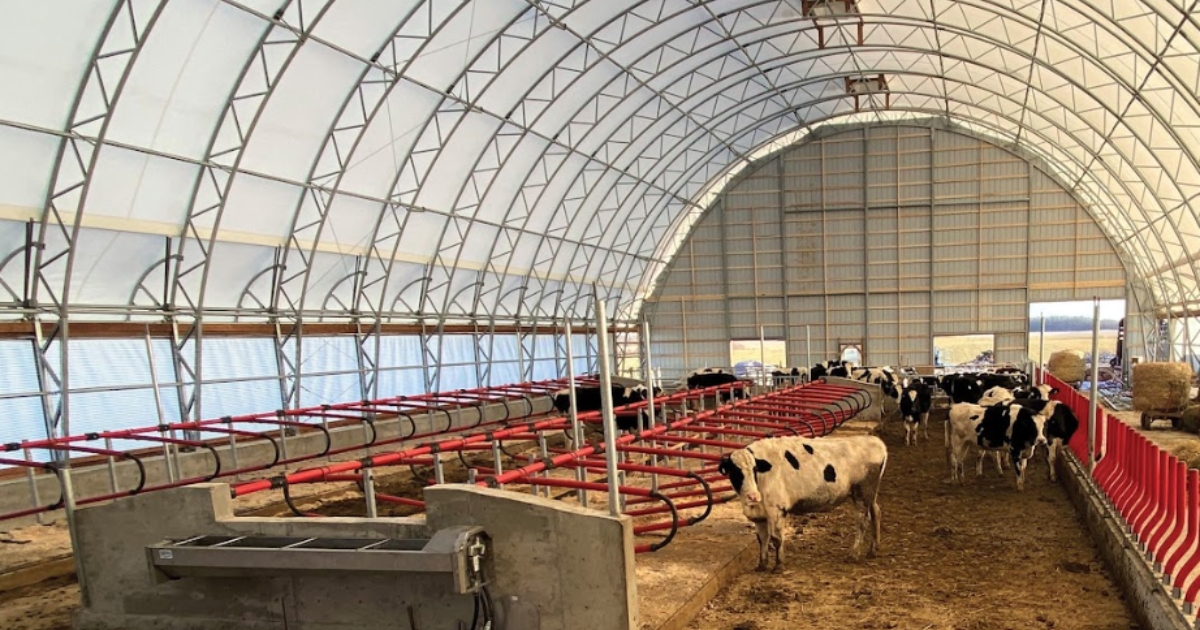
Insulation and Heating?
Fabric structures can be insulated with lined, fibre-batt or foil-backed insulation installed on the inside of the fabric cover, but this prevents natural light from diffusing through the fabric. All that great lighting was not something I was willing to give up with my structure, but there’s another way to look at things. If you only need a semi-heated space for equipment repairs or to make engines start easier in winter, then you might consider periodic heating as needed. Anything that delivers lots of heat in a short time, coupled with the natural warming of the space during sunny winter days, is a practical way to make things warm enough to be surprisingly comfortable when you have to change oil, fix an exhaust leak or feed the sheep in February.
Brand Matters
Trust is a big part of any storage structure you put up, and the larger the structure, the more likely you are to depend on it. Think of your equipment, your livestock or your workshop full of tools suddenly exposed to the full brunt of fall rains or winter blizzards because of a catastrophic failure. That would be an epic disaster, and it’s why I went with an experienced manufacturer that engineers every structure in a site-specific way. Not all do, so ask about this as you shop.
I went with Calhoun Super Structure for several reasons. First, they’re Canadian and supply structures across North America. They were also one of the pioneers as the fabric structure field came into existence in the early 1990s, and they made the first structure I ever saw. Working with their order and engineering department, they began with latitude and longitude figures of my site, incorporating snow load and wind load figures into the preliminary design they offered to me. Site-specific engineering like this is not common in the industry, but it adds a big layer of safety.
After some back and forth on design details with a sales rep and the company engineer, the final design and stamped drawings were accepted by my local building department without question.
There’s a lot of poor-quality offshore fabrics appearing in the industry these days, so pay attention to details, especially the presence of coatings that protect against UV breakdown. Calhoun uses high-density polyethylene rated to withstand more than 150 miles-per-hour winds and 300 pounds per square foot of snow load, with a minimum of 16 per cent translucency for light transmission. The fabric they use can withstand temperatures over 150oF and meets something called Cradle to Cradle Certified Product Standard (C2C). This is an international standard that covers health, equity and sustainability.
Galvanization of steel parts prevents corrosion, so look for brands that apply true hot-dipped galvanizing on all steel parts applied after manufacturing, as well as on nuts, bolts and washers. Some brands use pre-galvanized steel for certain parts, and this means that welds don’t get the benefit of full galvanization. Complete hot-dipped galvanizing solves this problem and is best by far.
Foundation Options
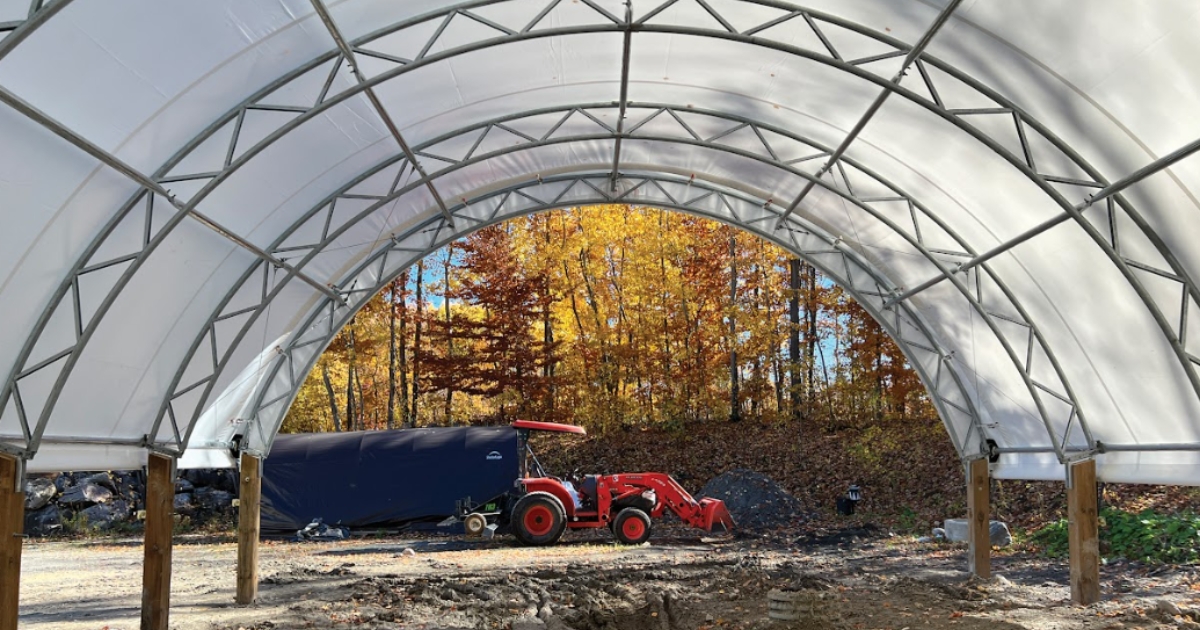
All large fabric structures need some kind of foundation and there are two things to consider as you’re choosing one. First, what kind of soil conditions do you have? And second, what kind of vertical walls would you like?
The most common foundation is simple—engineered wooden posts buried in soil, extending below the frost line. These posts can be left unclad for a shelter that offers basic roof protection only. You can also frame and sheath wooden posts for siding to create weatherproof walls. Other foundation options include large precast concrete blocks, poured concrete walls or even sea containers that provide both support and secure storage.
In my own case, the site I chose is relatively flat, exposed limestone bedrock. Good soil is rare enough on my land that I didn’t want to cover any with a structure and a driveway running to it. Bedrock situations are not all that rare in some parts of Canada, and my approach involved poured a nine-inch-thick engineered concrete wall on the limestone and pinned
to it with fiberglass rebar set into epoxy. Ten-feet-tall steel legs will bolt to this concrete, with the roof structure sitting on top.
Design Options
Fabric structures all have a domed roof shape, either semi-circular or rounded with a peak. And unless you have a particularly tall roof, any of these shapes will work well. I can’t see an advantage one way or the other. That said, design features that certainly do make a difference include:
Size and number of garage doors.
If your shelter will have any kind of walls that enclose the space below the roof, I strongly recommend having garage doors at both ends, not just one. Besides offering better ventilation in summer, two doors increase the amount of usable storage space on the floor. Instead of having to leave a central aisle open so you can retrieve equipment or items from the back, two big doors mean that the central area can be used for wall-to-wall storage.
Height and type of vertical walls.
The curved roof of most fabric shelters sits on some kind of vertical or near-vertical legs or walls because this greatly improves access to the edges of the structure. But vertical walls can also serve a structural purpose. If you’ll be using your shelter for livestock housing, you’ll probably want strong concrete walls you can push against with a loader for cleaning out manure. Or let’s say you’ll be using your structure as a workshop or for machinery maintenance. Some kind of frame wall for storage and sections with windows above a workbench makes sense.
Personnel door.
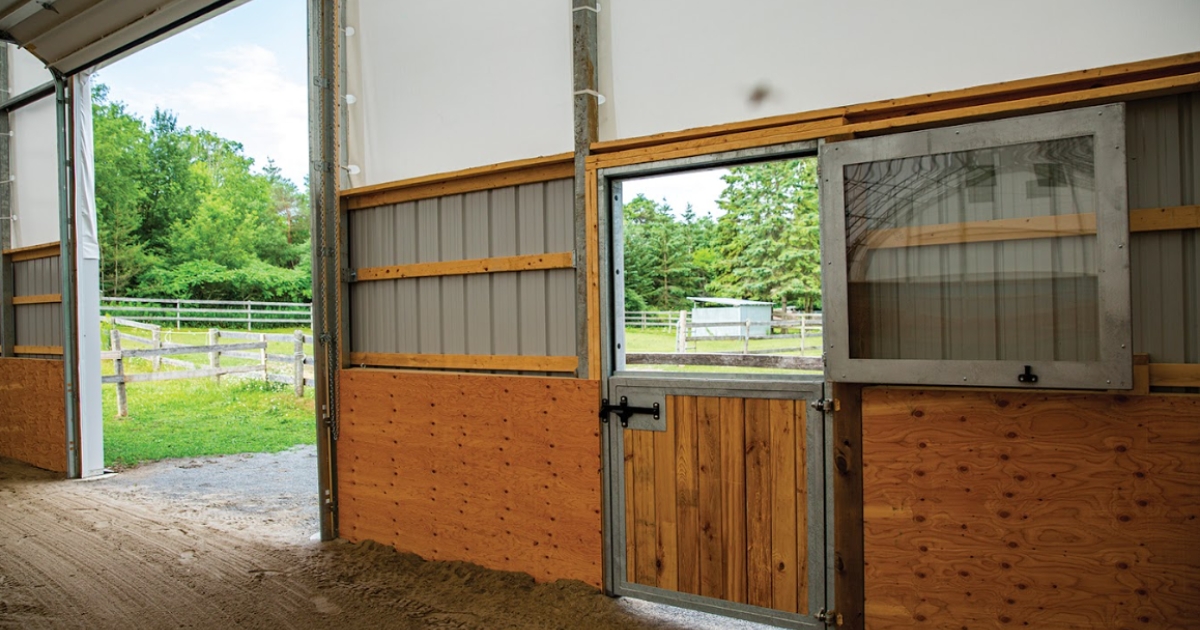
Garage doors alone are not sufficient for access into a structure with walls. You’ll also need some kind of personnel door for times when you don’t need to open the big doors, perhaps one at each end. Insulated steel exterior residential doors are a great option, especially if you intend to make your structure secure against theft.
Fabric colour and type.
Most shelters are covered in white fabric, since it resists fading and allows the most natural light in the shelter. Two-tone covers are an option, too (white and some other colour), or a plain colour such as green or red. Fabrics also come in different
durability ratings, with different warranty periods. Ask about this as you work with your supplier.
DIY Assembly or Hire Out?
I’m told that about half of all large fabric structures are put up by owners themselves, and the other half by installation crews. Whether or not it makes sense to do this as a DIY job depends on your answer to several questions. How comfortable are you using machines, sometimes at height? Every large fabric structure can only be assembled with some kind of equipment. You’ll need a tractor with a loader to unload the shipment when it arrives, and to move components around. How comfortable are you working at heights 25 feet or 35 feet off the ground?
You’ll need to rent some kind of sky lift to raise the frames and hold them in position while they’re braced and bolted. You’ll also need ropes, pulleys and a handful of people when it comes time to pull the cover over the frame on a dead-calm day. It’s serious work, but doable if you’re used to this sort of thing.
Fabric shelters are one option for getting economical sheltered space that lasts, and I find them to be one of the best choices. If you need convincing, just step inside one and see for yourself.